
Behind the Scenes: How Wastewater Services Keep Ireland’s Major Events Running
When thousands of people arrive at a festival, concert or sporting event, most will never think about what happens after they use a temporary toilet or shower.
Behind the stages, food vendors and packed crowds is a carefully planned network of temporary wastewater infrastructure. It must be monitored, serviced and emptied throughout the event to prevent disruption, protect the site and keep essential facilities available.
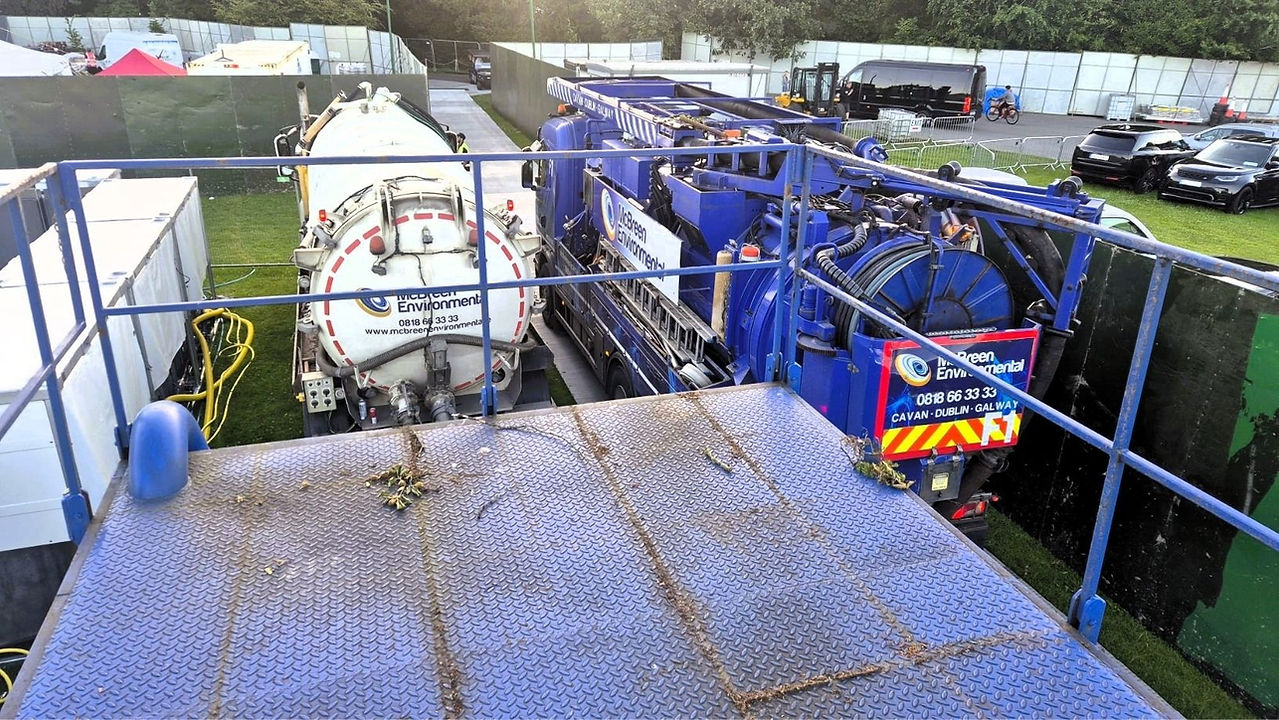
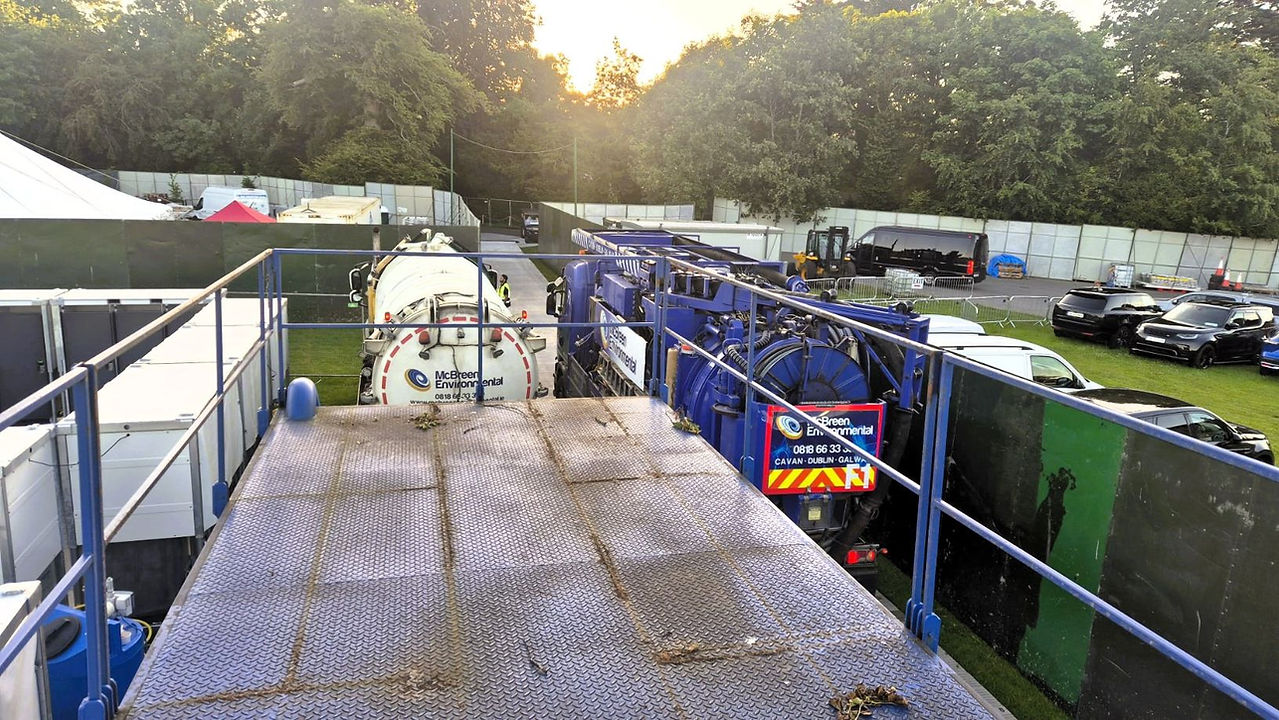
McBreen Environmental supports major events across Ireland with specialist waste tankering and wastewater services, helping organisers manage toilet and shower waste safely and efficiently from set-up through to final site clearance.
The wastewater challenge at large events
Festivals and outdoor events can place significant pressure on temporary sanitation systems. Large visitor numbers create high volumes of wastewater over a relatively short period, while restricted access, busy event schedules and changing ground conditions can make servicing more complex.
Temporary toilet and shower facilities must remain operational throughout the event. Delayed collections or insufficient storage capacity can lead to unpleasant odours, overflowing tanks, unavailable facilities and potential environmental issues.
For event organisers, this means wastewater management cannot be treated as a last-minute requirement. It needs to form part of the operational plan from the outset.
Waste tankering for temporary toilets and showers
McBreen Environmental provides scheduled waste tankering for temporary toilets, welfare facilities and shower units at festivals, concerts and large public events.
Our teams remove wastewater from holding tanks and transport it for appropriate treatment, helping maintain capacity across the site throughout the event programme.
Where showers are provided for attendees, performers, crews or campsite users, the resulting wastewater also requires regular collection. The frequency of servicing will depend on factors such as visitor numbers, the number and size of tanks, the event duration and expected usage levels.
By coordinating collections around the event schedule, our operatives can help minimise disruption while ensuring facilities remain available when they are needed most.
Planning around live event environments
Working at a live event requires more than simply arriving with a tanker. Vehicle movements, pedestrian areas, security restrictions, production schedules and temporary roadways must all be considered.
Access may be limited during public opening hours, meaning some servicing must take place early in the morning, overnight or during carefully agreed operational windows.
Clear communication between the wastewater contractor, event organiser, sanitation provider and site management team is essential. Tank locations, access routes and collection frequencies should be confirmed before the event begins, with contingency arrangements in place if usage exceeds expectations.
This planning becomes particularly important at multi-day festivals, where wastewater volumes can build quickly and ground conditions may change over the course of the event.
Supporting events across Ireland
During the event season, McBreen Environmental has supported wastewater operations at locations including:
Marlay Park, Malahide Castle, St Anne’s Park, Kaleidoscope at Glenveagh, Slane Castle, the Aviva Stadium, Iveagh Gardens, Virgin Media Park, Thomond Park, the Royal Hospital Kilmainham and Bloom in the Phoenix Park.
Each venue presents different logistical requirements. A city-centre stadium may involve tightly controlled access and fixed operational windows, while a large outdoor festival may require tankering across an extensive site containing campsites, welfare areas, hospitality zones and crew facilities.
The service must therefore be planned around the individual layout and demands of each event rather than approached as a standard collection route.
Preventing disruption during the event
Problems with temporary wastewater systems can quickly affect the visitor experience. Toilets and showers are essential facilities, and any interruption becomes highly visible when large crowds are present.
Planned tankering helps organisers reduce the risk of:
Holding tanks reaching capacity
Toilets or showers being taken out of service
Odours developing around public areas
Wastewater spills or overflows
Emergency collections during peak event hours
Delays during the post-event breakdown
Regular servicing also gives site teams greater visibility over usage and capacity, allowing collection schedules to be adjusted where necessary.
Safe removal and appropriate treatment
Wastewater collected from temporary facilities must be managed responsibly beyond the event site.
McBreen Environmental removes the waste using specialist tankering units and transports it for appropriate treatment. This ensures the contents are managed through a controlled process rather than discharged in a way that could affect the surrounding environment.
For organisers, working with an experienced wastewater contractor provides confidence that collection, transport and treatment are being handled as part of one coordinated service.
Planning wastewater services for your next event
The earlier wastewater requirements are considered, the easier it is to determine the correct tank capacity, servicing frequency, access arrangements and contingency measures.
Useful information at the planning stage includes:
Expected attendance
Event duration
Number of temporary toilets and showers
Holding tank sizes
Campsite and crew facility requirements
Available access routes
Permitted servicing times
Site restrictions and ground conditions
McBreen Environmental works with event organisers, production companies, sanitation providers and site teams to plan waste tankering around the specific demands of each venue.
Planning a festival, concert, sporting event or large public gathering? Speak to McBreen Environmental about scheduled waste tankering and wastewater support.